


Poinsettias, with their vibrant red bracts, are iconic symbols of the holiday season. Many plant enthusiasts and commercial growers alike are constantly seeking the best ways to cultivate these beautiful plants. One question that often arises is whether an LED grow light bar can be effectively used for poinsettias. As a supplier of high - quality LED grow light bars, I'm here to provide you with in - depth insights on this topic.
Understanding Poinsettias' Lighting Requirements
Poinsettias are native to Mexico and Central America. They are short - day plants, which means they require long periods of darkness to initiate flowering. Typically, poinsettias need about 14 - 16 hours of continuous darkness per day for about 6 - 8 weeks to form their characteristic colorful bracts. During the remaining 8 - 10 hours, they need sufficient light for photosynthesis.
Natural sunlight is ideal for poinsettias, but in many regions, especially during the winter months when poinsettias are in high demand, sunlight may be limited. This is where LED grow light bars come into play.
Advantages of Using LED Grow Light Bars for Poinsettias
1. Customizable Light Spectrum
LED grow light bars can be designed to emit specific wavelengths of light that are most beneficial for plant growth. For poinsettias, red and blue light are crucial. Red light promotes flowering and stem elongation, while blue light is essential for vegetative growth, including leaf development and chlorophyll production. Our Plant Grow Light Bar is precisely engineered to provide an optimal ratio of red and blue light, ensuring healthy growth and vibrant bracts in poinsettias.
2. Energy Efficiency
Compared to traditional lighting sources such as incandescent or fluorescent lights, LED grow light bars consume significantly less energy. This is not only cost - effective but also environmentally friendly. Our LED grow light bars use advanced technology to convert a higher percentage of electrical energy into light energy, reducing energy waste and lowering your electricity bills.

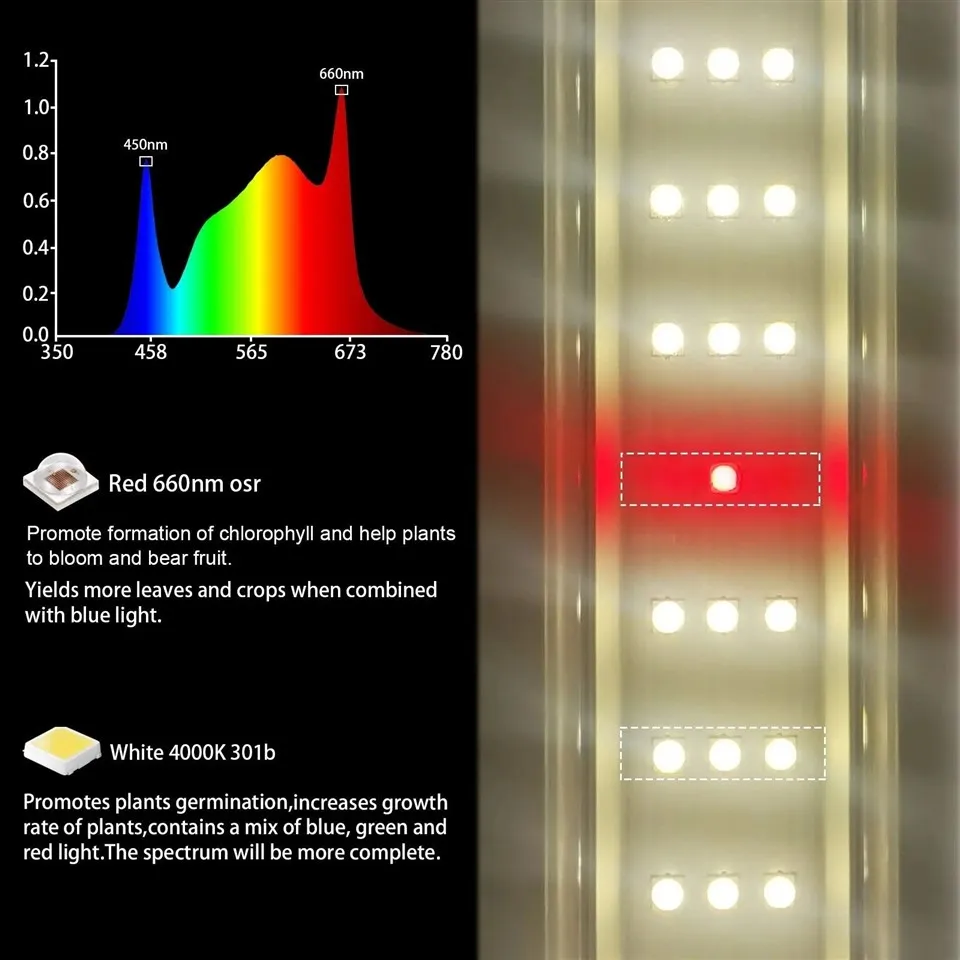
3. Long Lifespan
LEDs have a much longer lifespan than traditional bulbs. Our Single Bar LED Grow Light Bar can last up to 50,000 hours or more, which means you won't have to replace the lights frequently. This saves you both time and money in the long run, making it an ideal choice for commercial poinsettia growers.
4. Low Heat Emission
Poinsettias are sensitive to high temperatures. LED grow light bars emit very little heat compared to other lighting options. This minimizes the risk of heat stress on the plants, creating a more stable and comfortable growing environment.
How to Use LED Grow Light Bars for Poinsettias
1. Determine the Right Light Intensity
The light intensity required for poinsettias depends on their growth stage. During the vegetative stage, poinsettias need a light intensity of about 200 - 300 μmol/m²/s. As they enter the flowering stage, the light intensity can be increased to 300 - 500 μmol/m²/s. You can adjust the distance between the LED grow light bar and the plants to control the light intensity. For example, if the light is too intense, you can move the light bar further away from the plants.
2. Set the Correct Photoperiod
As mentioned earlier, poinsettias need 8 - 10 hours of light per day during the flowering induction period. You can use a timer to ensure that the LED grow light bar is turned on and off at the appropriate times. This mimics the natural light cycle and helps the plants develop properly.
3. Consider the Light Placement
Proper light placement is crucial for uniform growth. Place the LED grow light bars evenly above the poinsettias to ensure that all parts of the plants receive sufficient light. You may need to adjust the height and angle of the light bars as the plants grow.
Special Considerations for Poinsettias and UV LED Grow Light Bars
UV light can have both positive and negative effects on plants. In the case of poinsettias, a small amount of UV light can enhance the color and flavor of the bracts. Our UV LED Grow Light Bar can be used in combination with red and blue light bars to provide a more comprehensive light spectrum. However, it's important to use UV light in moderation, as excessive UV exposure can damage the plants.
Case Studies: Successful Poinsettia Cultivation with LED Grow Light Bars
Many of our customers have reported excellent results when using our LED grow light bars for poinsettia cultivation. One commercial grower in the Midwest was struggling with poor bract color and slow growth due to limited sunlight during the winter. After switching to our Plant Grow Light Bar, they noticed a significant improvement in the quality of their poinsettias. The bracts were brighter and more vibrant, and the plants grew faster and healthier.
Another hobbyist gardener in a northern state was able to grow beautiful poinsettias indoors using our Single Bar LED Grow Light Bar. The light bar provided the perfect amount of light for the plants, allowing them to thrive even in a low - light environment.
Conclusion
In conclusion, LED grow light bars are an excellent choice for poinsettia cultivation. They offer customizable light spectra, energy efficiency, long lifespan, and low heat emission, all of which are beneficial for the health and growth of poinsettias. Whether you're a commercial grower or a home gardener, our LED grow light bars can help you achieve beautiful, vibrant poinsettias.
If you're interested in learning more about our products or discussing your specific poinsettia growing needs, we'd love to hear from you. Contact us today to start a conversation about how our LED grow light bars can transform your poinsettia cultivation.
References
- Arney, S. T., & Mitchell, H. K. (1956). The effect of light quality on growth and flowering of plants. Botanical Gazette, 117(4), 269 - 280.
- Cockshull, K. E. (1985). Photoperiodic control of flowering in poinsettia (Euphorbia pulcherrima Willd.). Scientia Horticulturae, 26(1 - 2), 1 - 14.
- Heo, J., & Runkle, E. S. (2016). Effects of light quality and photoperiod on growth and flowering of poinsettia. HortScience, 51(12), 1563 - 1569.


