
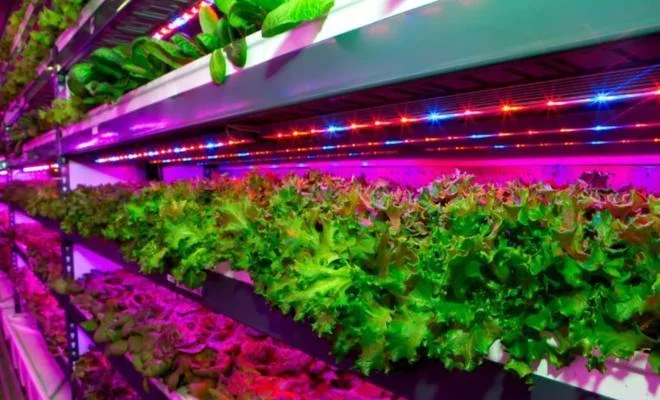
One of the biggest problems with vertical farming is its high operational costs, particularly energy consumption. Vertical farming typically relies on LED plant growth lights to provide the necessary light for photosynthesis. These growth lights simulate natural light conditions, ensuring sufficient light duration for crops:
High Energy Costs
Plant growth lights are the core equipment in vertical farming, providing the light needed for photosynthesis. Although LED lights are more energy-efficient than traditional light sources, the electricity consumption remains significant in vertical farming due to the need for multi-layer cultivation and prolonged lighting. Especially for crops with high light requirements (such as leafy greens or fruit-bearing vegetables), energy costs can account for 20%-30% of total operational expenses.
Matching Light Efficiency with Plant Needs
Different plants have varying requirements for light intensity, spectrum (e.g., blue light, red light ratios), and photoperiod (light duration). While LED plant growth lights can adjust the spectrum, optimizing light conditions to meet the needs of multiple crops remains a technical challenge. Improper light parameter settings may lead to energy waste or inefficient crop growth.
Heat Dissipation Issues
LED plant growth lights generate heat during operation, especially in densely packed vertical farming environments. Excessive heat can cause indoor temperatures to rise, negatively affecting crop growth. To maintain optimal temperatures, additional cooling systems (such as air conditioning or ventilation equipment) are required to ensure better crop growth.
High Initial Investment
High-quality LED plant growth lights and their control systems are expensive, particularly in large-scale vertical farming, where a large number of lights are needed to cover multi-layer growing areas. Additionally, vertical farming requires other high-cost infrastructure (such as multi-layer growing racks, irrigation systems, and environmental control systems), resulting in a high initial investment barrier.
Sustainability Concerns
Vertical farming relies on LED plant growth lights and other electrical equipment. If the electricity comes from non-renewable energy sources (such as coal-fired power), its carbon footprint may be significant.
Conclusion
The biggest problem with vertical farming lies in its high energy consumption and costs. Addressing these issues requires technological advancements, such as developing more efficient LED lights, optimizing light management, and utilizing renewable energy to reduce operational costs and environmental impact.