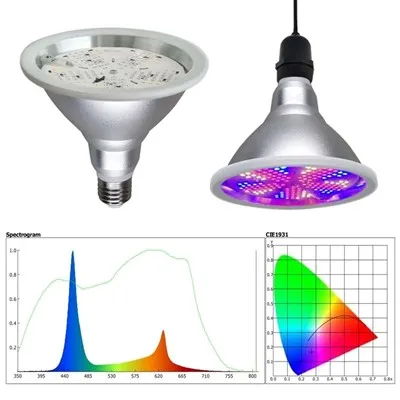

As a supplier of UV grow light bulbs, I've witnessed firsthand the remarkable advancements in indoor gardening and the crucial role that lighting plays in plant growth. One area that has recently piqued my interest is the interaction between UV grow light bulbs and plant mycorrhizal associations. In this blog post, I'll delve into the science behind this fascinating relationship and explore how our UV grow light bulbs can enhance these beneficial partnerships.
Understanding Mycorrhizal Associations
Mycorrhizae are symbiotic relationships between fungi and plant roots. These associations are ancient and widespread, with over 90% of all plant species forming some type of mycorrhizal relationship. There are two main types of mycorrhizae: ectomycorrhizae and endomycorrhizae. Ectomycorrhizae form a sheath around the plant roots, while endomycorrhizae penetrate the root cells.
The benefits of mycorrhizal associations are numerous. The fungi help the plant absorb nutrients, such as phosphorus, nitrogen, and water, from the soil. In return, the plant provides the fungi with carbohydrates produced through photosynthesis. This mutualistic relationship enhances plant growth, improves plant health, and increases resistance to diseases and pests.
The Role of UV Light in Plant Growth
Ultraviolet (UV) light is a part of the electromagnetic spectrum with wavelengths shorter than visible light. It is further divided into three categories: UV-A (315-400 nm), UV-B (280-315 nm), and UV-C (100-280 nm). While UV-C is mostly absorbed by the Earth's atmosphere, UV-A and UV-B can reach the surface and have significant effects on plant growth.
UV light plays a crucial role in various plant processes. It can stimulate the production of secondary metabolites, such as flavonoids and phenolic compounds, which have antioxidant and protective properties. These compounds help the plant defend against environmental stresses, such as UV radiation, pathogens, and herbivores. UV light can also affect plant morphology, including leaf thickness, stem elongation, and branching.
How UV Grow Light Bulbs Interact with Mycorrhizal Associations
The interaction between UV grow light bulbs and mycorrhizal associations is a complex and emerging area of research. While more studies are needed to fully understand the mechanisms involved, there is evidence to suggest that UV light can have both positive and negative effects on mycorrhizal fungi and their symbiotic relationship with plants.
Positive Effects
- Enhanced Nutrient Uptake: UV light can stimulate the production of root exudates, which are organic compounds released by plant roots into the soil. These exudates can attract mycorrhizal fungi and promote the formation of mycorrhizal associations. Additionally, UV light can increase the activity of enzymes involved in nutrient uptake, such as phosphatases, which can enhance the availability of phosphorus to the plant.
- Improved Plant Health: As mentioned earlier, UV light can stimulate the production of secondary metabolites in plants. These compounds can have antifungal and antibacterial properties, which can help protect the plant and the mycorrhizal fungi from diseases. By improving plant health, UV light can indirectly support the growth and function of mycorrhizal associations.
- Increased Symbiotic Efficiency: Some studies have suggested that UV light can enhance the efficiency of the mycorrhizal symbiosis. For example, UV radiation can increase the transfer of carbon from the plant to the fungi, which can improve the growth and development of the fungi. This, in turn, can lead to better nutrient uptake and plant growth.
Negative Effects
- Direct Damage to Fungi: High levels of UV radiation can be harmful to mycorrhizal fungi. UV light can damage the DNA, proteins, and cell membranes of the fungi, leading to reduced growth and viability. Additionally, UV radiation can disrupt the communication between the plant and the fungi, which can affect the formation and function of mycorrhizal associations.
- Altered Plant Physiology: Excessive UV light can also have negative effects on plant physiology, which can indirectly impact mycorrhizal associations. For example, UV radiation can cause oxidative stress in plants, which can lead to the production of reactive oxygen species (ROS). These ROS can damage plant cells and tissues, and may also affect the growth and function of mycorrhizal fungi.
Optimizing the Use of UV Grow Light Bulbs for Mycorrhizal Associations
To maximize the benefits of UV grow light bulbs while minimizing the potential negative effects on mycorrhizal associations, it is important to use the right type and intensity of UV light. Here are some tips:


- Choose the Right Wavelength: Different wavelengths of UV light have different effects on plants and mycorrhizal fungi. UV-A light is generally considered to be less harmful and may have more beneficial effects on mycorrhizal associations compared to UV-B light. When selecting UV grow light bulbs, look for products that emit a balanced spectrum of UV-A and UV-B light.
- Control the Intensity and Duration: It is important to use UV light at the appropriate intensity and duration. High levels of UV radiation can be harmful to both plants and mycorrhizal fungi. Start with low levels of UV light and gradually increase the intensity over time. Additionally, limit the duration of UV exposure to avoid excessive damage.
- Combine with Other Lighting Sources: UV grow light bulbs can be used in combination with other lighting sources, such as LED plant light bulbs LED Plant Light Bulbs. This can provide a more balanced spectrum of light and ensure that plants receive all the necessary wavelengths for optimal growth.
Our UV Grow Light Bulbs
At our company, we offer a range of high-quality UV grow light bulbs that are designed to meet the specific needs of indoor gardeners. Our UV Grow Light Bulb emits a balanced spectrum of UV-A and UV-B light, which can enhance plant growth and support mycorrhizal associations. Our bulbs are energy-efficient, long-lasting, and easy to install, making them a great choice for both hobbyists and commercial growers.
We also offer E27 Grow Light Bulb, which are compatible with standard E27 sockets. These bulbs are available in different wattages and spectrums, allowing you to customize your lighting setup according to your specific requirements.
Contact Us for Procurement
If you're interested in learning more about our UV grow light bulbs and how they can benefit your plants and mycorrhizal associations, please don't hesitate to contact us. We'd be happy to answer any questions you may have and provide you with more information about our products. Whether you're a small-scale indoor gardener or a large commercial grower, we can help you find the right lighting solution for your needs.
References
- Allen, M. F. (1991). The Ecology of Mycorrhizae. Cambridge University Press.
- Ballaré, C. L., et al. (2011). UV-B radiation and plant–insect interactions. Trends in Plant Science, 16(1), 61-68.
- González-Guerrero, M., et al. (2016). The role of reactive oxygen species in the establishment and functioning of mycorrhizal associations. New Phytologist, 210(4), 1273-1284.
- Jansen, M. A. K., et al. (1998). UV-B-induced DNA damage and repair: a review. Photochemistry and Photobiology, 68(2), 186-200.
- Smith, S. E., & Read, D. J. (2008). Mycorrhizal Symbiosis. Academic Press.