


Even lighting in a hexagonal fish tank is crucial for both the visual appeal of the tank and the well - being of the aquatic life within. As a supplier of Fish Tank Light Bulb, I've encountered numerous customers seeking solutions to this specific challenge. In this blog, I'll share some scientific and practical ways to achieve even lighting in a hexagonal fish tank.
Understanding the Challenges of Hexagonal Fish Tanks
Hexagonal fish tanks have unique geometric properties compared to traditional rectangular or square tanks. Their angled sides can cause light to reflect and refract in complex ways, leading to uneven lighting distribution. Shadows may form in the corners, and some areas may receive more intense light than others. This uneven lighting can not only make the tank look less aesthetically pleasing but also have a negative impact on the fish and plants. For example, plants may grow unevenly if they don't receive consistent light, and fish may become stressed due to the contrast between bright and dark areas.
Factors Affecting Lighting Distribution
Before diving into the solutions, it's important to understand the factors that influence how light is distributed in a fish tank.
- Light Source Characteristics: The type, intensity, and color temperature of the light bulb play a significant role. Different types of bulbs, such as incandescent, fluorescent, and LED, emit light in different ways. LED bulbs are often preferred for fish tanks because they are energy - efficient, long - lasting, and can be customized to emit specific wavelengths of light. The intensity of the light determines how far it can penetrate the water, and the color temperature affects the appearance of the tank and the growth of plants. For instance, a lower color temperature (around 2700K - 3000K) gives a warm, yellowish light, while a higher color temperature (around 5000K - 6500K) provides a cooler, bluish - white light that is more suitable for simulating natural daylight.
- Tank Size and Shape: As mentioned earlier, the hexagonal shape of the tank can cause light to scatter in unpredictable ways. The size of the tank also matters. Larger tanks require more powerful light sources to ensure that light reaches all areas.
- Water Properties: The clarity, depth, and chemical composition of the water can affect light transmission. Dirty or murky water can absorb and scatter light, reducing its intensity and causing uneven distribution. Deeper water also requires more powerful light to penetrate to the bottom.
Solutions for Even Lighting
1. Multiple Light Sources
One of the most effective ways to achieve even lighting in a hexagonal fish tank is to use multiple light sources. Instead of relying on a single large light bulb, you can place several smaller bulbs around the perimeter of the tank. For example, you could install three or six small Fish Tank Light Bulb at equal intervals around the top of the tank. This helps to reduce shadows and ensures that light reaches all corners of the tank.
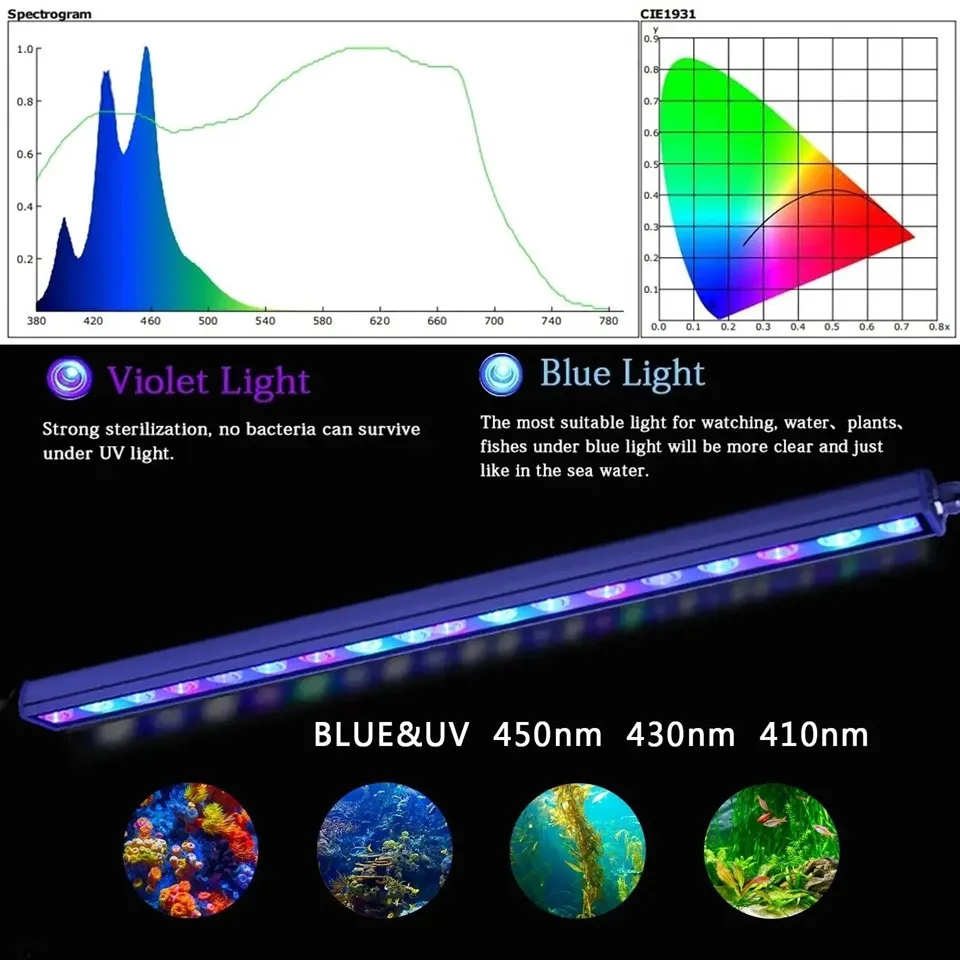

When using multiple light sources, it's important to choose bulbs with similar characteristics, such as intensity and color temperature, to maintain a consistent look. You can also use a dimmer switch to control the overall brightness of the lights and create different lighting effects.
2. Reflectors and Diffusers
Reflectors can be used to direct light towards the areas of the tank that need it most. They are typically made of a reflective material, such as aluminum, and can be placed behind the light bulbs. Reflectors help to increase the efficiency of the light source by reflecting light that would otherwise be lost.
Diffusers, on the other hand, are used to spread the light evenly. They can be made of a translucent material, such as acrylic or frosted glass, and are placed in front of the light bulbs. Diffusers soften the light and reduce the intensity of direct light, which can help to eliminate harsh shadows and create a more uniform lighting effect.
3. Positioning of Light Sources
The position of the light sources is crucial for even lighting. For a hexagonal fish tank, it's best to place the light bulbs at the center of each side or at the corners. Placing the bulbs at the center of each side can provide a more direct and even light distribution across the width of the tank. If you place the bulbs at the corners, the light will spread out in a wider angle, covering more of the tank's surface area.
It's also important to consider the height of the light sources above the tank. If the light is too close to the water surface, it may create a concentrated beam of light that causes uneven lighting. On the other hand, if the light is too far away, the intensity of the light may be too low to reach the bottom of the tank. A good rule of thumb is to place the light sources about 6 - 12 inches above the water surface, depending on the size and depth of the tank.
4. Use of Fish Tank Light Bar
Fish tank light bars are another option for achieving even lighting in a hexagonal fish tank. They are long, narrow light fixtures that can be placed along the top of the tank. Light bars often contain multiple LED bulbs, which can be arranged in a way that provides a more uniform light distribution.
You can use one or more light bars depending on the size of the tank. For a small hexagonal tank, one light bar may be sufficient, while larger tanks may require two or more light bars placed parallel to each other. Light bars can also be adjusted in terms of brightness and color temperature, allowing you to customize the lighting to suit the needs of your fish and plants.
5. Consider Fish Tank Grow Lights for Plant - Filled Tanks
If your hexagonal fish tank contains a lot of plants, using Fish Tank Grow Lights is essential. These lights are specifically designed to provide the wavelengths of light that are necessary for plant growth, such as red and blue light.
Grow lights can be used in combination with other light sources to ensure that both the fish and the plants in the tank are well - lit. You can adjust the intensity and duration of the grow lights according to the type of plants in the tank. For example, some plants require more light than others, and some may need a longer photoperiod (the length of time the lights are on each day).
Maintenance and Monitoring
Once you've set up the lighting system for your hexagonal fish tank, it's important to maintain and monitor it regularly. Check the light bulbs for any signs of damage or malfunction, and replace them as needed. Clean the reflectors and diffusers to ensure that they are working efficiently.
You should also monitor the behavior of your fish and the growth of your plants. If you notice any signs of stress in the fish, such as reduced activity or loss of appetite, or if the plants are not growing properly, it may be a sign that the lighting is not adequate. Adjust the lighting system accordingly to ensure the health and well - being of your aquatic life.
Conclusion
Achieving even lighting in a hexagonal fish tank requires a combination of careful planning, the right choice of light sources, and proper installation. By using multiple light sources, reflectors, diffusers, and considering the specific needs of your fish and plants, you can create a beautiful and healthy environment for your aquatic pets.
As a Fish Tank Light Bulb supplier, I'm committed to providing high - quality lighting solutions for fish tanks. If you're interested in purchasing our products or have any questions about lighting your hexagonal fish tank, please feel free to contact us for a procurement discussion. We'll be happy to assist you in finding the best lighting solution for your needs.
References
- "Aquarium Lighting: A Comprehensive Guide" by [Author's Name, if available]
- "The Science of Aquarium Lighting" from a scientific journal on aquaculture or aquarium studies
- Manufacturer's guides for fish tank light bulbs, light bars, and grow lights.


