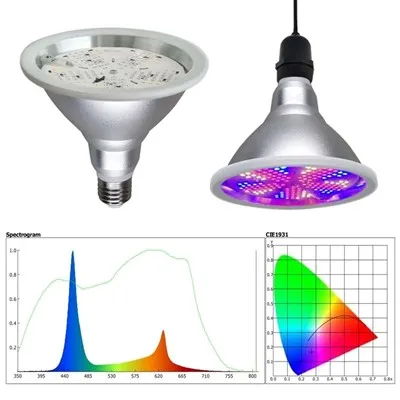

Hey there, fellow plant enthusiasts! As a supplier of Plant Grow Light Bars, I've gotten tons of questions about the difference between a plant grow light bar and a regular light. So, I thought I'd break it down for you in this blog post.
Let's start with the basics. Regular lights, like the ones you have in your home or office, are designed mainly for general illumination. They're meant to light up a room so you can see what you're doing, read a book, or just make the space look nice. These lights usually emit a broad spectrum of light that's balanced to mimic natural daylight as closely as possible. For example, a standard LED bulb in your living room will give off a mix of colors that make everything look normal to the human eye.
On the other hand, plant grow light bars are specifically engineered to meet the unique needs of plants. You see, plants don't use light in the same way we do. They rely on light for photosynthesis, a process where they convert light energy into chemical energy to fuel their growth. Different stages of a plant's life cycle require different wavelengths of light.
One of the key differences is the light spectrum. Regular lights typically have a spectrum that's optimized for human vision, which means they focus on the visible light range that we can see clearly. This range is mainly between 400 - 700 nanometers. But plants actually use a wider range of light, including some that we can't even see, like ultraviolet (UV) and infrared (IR) light.
Plant grow light bars are designed to provide a more targeted spectrum. For instance, during the vegetative stage, plants need more blue light. Blue light stimulates strong, healthy leaf and stem growth. It helps the plant develop a sturdy structure and promotes compact growth. Our Spider LED Grow Lights Bar is great for this stage as it can be adjusted to emit a higher proportion of blue light.
When the plant enters the flowering and fruiting stage, it needs more red light. Red light is crucial for triggering the flowering process and promoting the production of fruits and flowers. Some grow light bars can be adjusted to switch between different spectra to support these different growth stages.
Another difference is the intensity of the light. Regular lights are usually not strong enough to support plant growth over the long term. They might provide enough light for a small houseplant to survive, but if you're looking to grow a large number of plants or have them thrive, you'll need a more powerful light source. Plant grow light bars are designed to deliver a high-intensity light that can penetrate deep into the plant canopy. This ensures that all parts of the plant receive enough light for photosynthesis.
The UV LED Grow Light Bar is a great example. UV light, although not visible to us, can have some beneficial effects on plants. It can help enhance the plant's natural defenses against pests and diseases, and it can also improve the flavor and aroma of some fruits and vegetables.
Durability is also a factor. Regular lights are not built to withstand the conditions in a grow environment. In a greenhouse or indoor grow setup, there can be high humidity, temperature fluctuations, and even splashes of water. That's where our Waterproof LED Grow Light Bar comes in handy. It's designed to be resistant to water and moisture, ensuring a long lifespan even in challenging conditions.
Energy efficiency is yet another aspect. Plant grow light bars are becoming more and more energy - efficient. They use advanced LED technology that consumes less electricity compared to traditional lighting sources. This not only saves you money on your energy bills but also reduces your carbon footprint. Regular lights, especially older incandescent bulbs, can be quite energy - hungry.


Now, let's talk about cost. Initially, plant grow light bars might seem more expensive than regular lights. But when you consider the long - term benefits, it's a worthy investment. You'll get better plant growth, higher yields, and less energy consumption. And as a supplier, we offer competitive prices and high - quality products.
If you're a hobbyist looking to grow some herbs on your kitchen counter or a commercial grower with a large operation, our plant grow light bars can meet your needs. Whether you're growing tomatoes, lettuce, or orchids, the right grow light bar can make all the difference.
So, if you're interested in learning more about our plant grow light bars or want to start a purchase negotiation, don't hesitate to reach out. We're here to help you choose the best light for your plants and make your growing experience a success.
References
- Smith, J. (2020). "The Science of Plant Lighting". Greenhouse Journal.
- Johnson, R. (2021). "LED Lighting for Indoor Plant Growth". Horticulture Today.