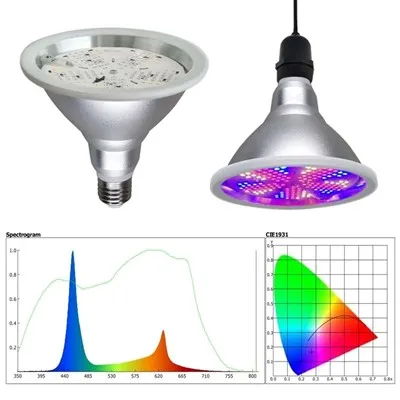

Hey there, fellow plant enthusiasts! As a supplier of UFO Plant Lights, I'm super stoked to dive into the fascinating topic of what colors of light these bad boys emit. You might be wondering why the color of light matters when it comes to growing plants. Well, let me tell you, it's a game-changer!
Plants, just like us, have their own preferences when it comes to light. Different colors of light play crucial roles in various stages of a plant's growth, from germination to flowering and fruiting. That's where our UFO Plant Lights come in, offering a carefully crafted spectrum of light to give your plants the best possible environment to thrive.


Let's start by talking about the most well-known colors of light in the plant-growing world: red and blue. These two colors are like the dynamic duo of plant lighting. Red light is essential for promoting flowering and fruiting. It stimulates the production of hormones in plants that are responsible for these processes. When plants receive enough red light, they tend to produce more flowers and fruits, and the quality of these produce is often better too.
On the other hand, blue light is crucial for vegetative growth. It helps plants develop strong stems and leaves. Blue light also plays a role in regulating a plant's circadian rhythm, which is like its internal clock. By providing the right amount of blue light, we can ensure that our plants grow healthy and strong during their vegetative stage.
Our UFO Grow Light Full Spectrum is designed to emit a balanced combination of red and blue light. This means that whether your plants are in the vegetative stage or the flowering stage, they'll get the light they need to grow to their full potential. The full spectrum also includes other colors of light, such as green, yellow, and orange, which may not be as well-known for their effects on plant growth but still play important roles.
Green light, for example, is not just there for show. While plants don't absorb green light as efficiently as they do red and blue light, it still contributes to photosynthesis. Green light can penetrate deeper into the plant canopy, allowing lower leaves to receive some light and participate in the photosynthetic process. This is especially important in dense plant setups where the upper leaves might block a lot of the light.
Yellow and orange light also have their benefits. They can enhance the overall growth and development of plants, and they may even improve the flavor and aroma of fruits and vegetables. Our UFO Plant Lights are engineered to emit these colors in the right proportions to give your plants a well-rounded light spectrum.
Now, you might be thinking, "Why choose UFO Plant Lights over other types of plant lights?" Well, let me give you a few reasons. First of all, our LED UFO Grow Light is highly energy-efficient. LEDs use less electricity compared to traditional lighting sources, which means you'll save money on your energy bills in the long run. They also produce less heat, which reduces the risk of overheating your plants.
Another great thing about our UFO Plant Lights is their design. The UFO shape allows for a more even distribution of light. This means that all parts of your plants will receive an equal amount of light, resulting in more uniform growth. Whether you're growing a small herb garden on your windowsill or a large commercial crop, our UFO Plant Lights can provide the coverage you need.
Our UFO Plant Light is also very easy to install. You don't need to be a lighting expert to set it up. Just follow the simple instructions, and you'll have your plants bathed in the perfect light in no time. And if you have any questions or need help along the way, our customer support team is always here to assist you.
In addition to the standard red, blue, green, yellow, and orange light, some of our UFO Plant Lights also emit ultraviolet (UV) and infrared (IR) light. UV light can help plants produce more antioxidants, which can improve their resistance to pests and diseases. It can also enhance the color and flavor of fruits and vegetables. IR light, on the other hand, can help regulate the temperature of the plant canopy and promote root development.
When it comes to choosing the right UFO Plant Light for your needs, there are a few things to consider. First, think about the size of your growing area. If you have a small space, a lower-wattage light might be sufficient. But if you're growing a large number of plants or have a bigger area to cover, you'll need a higher-wattage light.
You should also consider the stage of growth of your plants. If your plants are in the vegetative stage, you might want a light that emits more blue light. If they're in the flowering or fruiting stage, a light with more red light would be more beneficial. Our team can help you choose the right light based on your specific requirements.
So, if you're looking to take your plant-growing game to the next level, our UFO Plant Lights are the way to go. With their carefully crafted spectrum of light, energy efficiency, and easy installation, they're the perfect solution for both amateur and professional growers.
If you're interested in learning more about our UFO Plant Lights or would like to place an order, don't hesitate to get in touch. We're always happy to have a chat and discuss how our lights can benefit your plants. Whether you're a hobbyist looking to grow some fresh herbs at home or a commercial grower with a large-scale operation, we have the right solution for you. Let's work together to help your plants reach their full potential!
References
- Smith, J. (2020). The Science of Plant Lighting. Gardening Today, 15(3), 45 - 52.
- Johnson, A. (2019). Understanding the Role of Different Light Colors in Plant Growth. Horticulture Journal, 22(4), 78 - 85.