
If you're running a small to mid-sized greenhouse-whether you're growing leafy greens, herbs, or flowering crops to sell at local farmers' markets-you've probably stared at your shade-cloth-covered grow space on a gray winter day and thought, "Wait, can I just swap some regular bulbs for LED plant light bulbs?" Spoiler: you absolutely can. As someone who's been part of the LED plant light bulbs team for years, I've talked to hundreds of greenhouse owners who were skeptical at first, but once they tested our products, they cut their energy bills, fixed stretched, "leggy" seedlings, and even got a jump on harvest season by 2–3 weeks. This post isn't just a yes/no answer-it's a breakdown of how to make LED bulbs work for your specific setup, what to watch out for, and why dimmable or infrared (IR) options might be non-negotiable for your space.
First, let's get the basics out of the way: greenhouses have two light sources-natural sunlight and supplemental grow lights. Traditional HPS (high-pressure sodium) or fluorescent fixtures have been the go-to for decades, but they're energy hogs, run hot enough to scorch tender leaves, and only put out a narrow band of light that doesn't fully support every stage of a plant's life. LED plant light bulbs, on the other hand, are engineered to emit specific wavelengths: blue for leafy growth, red for flowering and fruiting, and sometimes IR for extra energy efficiency. That's why they're such a game-changer for greenhouses where sunlight is scarce, like in northern climates from November to February.
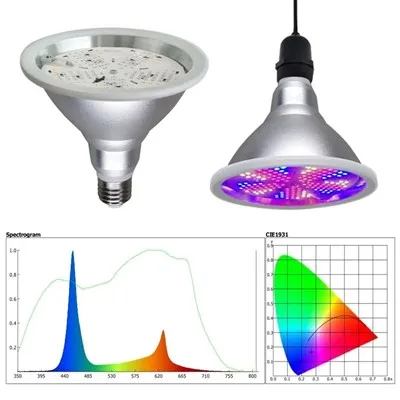
But wait-can you just screw a random LED bulb from your home hardware store into a greenhouse socket? Probably not. The home bulbs are made for human vision, so they focus on white light, which is a mix of blue and red but not tuned to plant needs. Greenhouse plants need a precise ratio-most common crops (basil, lettuce, tomatoes, succulents) do best with a 5:1 red-to-blue spectrum, roughly. Our LED plant light bulbs are calibrated exactly for that ratio, so you don't have to guess if you're wasting energy on wavelengths plants don't use.

Now, let's talk about why dimmable grow light bulbs matter so much for greenhouses. Greenhouses aren't one-size-fits-all-you might be starting seedlings in a separate tray in early spring, where they only need 10–12 hours of light a day at low intensity, then cranking that up to 14–16 hours when they're transplant-ready. Or you might be growing flowering crops, which respond to different light levels than leafy greens. If your lights are fixed at full brightness, you'll either waste energy on seedlings that don't need it or not give flowering crops enough light to produce buds. Our dimmable grow light bulb lets you adjust output from 10% to 100% with a simple dial, so you can tweak the light to match whatever stage your plants are in without buying a whole new fixture. We've had a customer in Maine who grows cherry tomatoes for local restaurants say dimmable bulbs saved her $120 a month on electricity last winter, because she turned the brightness down on cloudy days instead of running extra lights.
Another key point for greenhouses: heat management. A lot of new growers forget that even in shaded greenhouses, temperatures can spike on sunny days, and too much heat will stress plants even if light levels are perfect. Traditional HPS bulbs put out 80–90% of their energy as heat, which means you're either running a fan nonstop to cool your greenhouse or risking leaf burn. LEDs run at less than 5% heat loss-so they don't add extra heat to your space, which means you can skip overworked cooling systems and keep your greenhouse at the consistent 60–75°F most plants prefer. That's a huge win for small greenhouse operators who don't have a big HVAC budget.
What about space constraints? If you're working in a greenhouse with tight shelf space or hanging racks, you don't want bulky, awkward fixtures that block access to your plants. LED plant light bulbs are designed to fit into standard sockets, including E27 grow light bulbs- the most common screw base for greenhouse fixtures. No need to rewire your entire setup; just unscrew your old bulb and swap it for an LED one. That's a massive time-saver for growers who are already juggling planting schedules, watering, and pest control. Our E27 grow light bulbs are also compatible with most existing greenhouse light sockets, so you don't have to spend extra money on new hardware to make the switch.

Wait, what about outdoor grow light bulbs? If you're someone who's running a greenhouse with a side plot of outdoor raised beds, outdoor grow light bulbs work too-they're weatherproof, so they can handle rain, snow, and humidity, which is perfect for extending your growing season into late fall or even winter for cold-hardy crops like kale or winter wheat. We've had customers who use outdoor grow light bulbs on their greenhouse's side edges to supplement sunlight for plants that need a little extra light without being inside the main growing space.
Now, let's get into the science that makes this all work. Plants use photosynthesis to turn light into energy, and the two most important wavelengths are red (600–700 nm) and blue (400–500 nm). Red light triggers flowering and fruiting, while blue light prevents leggy growth by regulating cell elongation. IR light (700+ nm, which you can find in our IR grow light bulb) might sound counterintuitive, but it actually helps plants absorb more energy from the light they get, and it supports root development. For greenhouses, where sunlight can be variable, adding IR means your plants are using the light more efficiently, so you don't have to run your lights as long to get the same growth. A study from the University of California, Davis, found that using IR-augmented LEDs reduced grow time for lettuce by 11% compared to standard LED setups- that's a bigger harvest faster, which translates to more revenue for you.
But let's be real-there are a few pitfalls to avoid when switching to LED bulbs in a greenhouse. First, light distance: LED bulbs are powerful, so you don't want to hang them too close to your plants (less than 12 inches) because that can scorch leaves, especially on tender seedlings. If you're using dimmable bulbs, you can hang them a little lower and turn the brightness down if you're worried about heat, but always check the manufacturer's guidelines. Second, light cycle: plants need a period of darkness too-most crops need 8–12 hours of dark a day, so don't run your LEDs 24/7, even in winter. That will disrupt their growth cycle and make them more prone to disease. Third, quality matters: not all LED grow bulbs are created equal. Cheap off-brand bulbs might claim to have the right spectrum, but they'll burn out in 6 months and actually put out less useful light than ours. We test every single LED plant light bulb to make sure they meet our spectrum and efficiency standards, so you don't have to worry about replacing them every few months.
Another thing to consider for greenhouses: energy costs. Traditional HPS bulbs use 100–150 watts per fixture, while LED bulbs for greenhouses use 20–50 watts for the same light output. That's a 70–80% reduction in electricity use. For a greenhouse with 10 light fixtures, that's $50–$100 a month in savings, depending on your local electricity rates. Multiply that over a year, and that's money you can put back into seeds, soil, or marketing your produce. We've had a customer in Ohio who switched to our LED plant light bulbs and cut his annual energy bill for the greenhouse by $1,200- that's enough to buy 50 trays of herb seedlings or a new irrigation system.

Now, if you're still on the fence, here's a quick scenario: if you're growing seedlings in January, you can use a dimmable grow light bulb set to 20% brightness, 12 hours a day, to help them grow strong and compact without stretching. Once you transplant them into the main greenhouse in March, turn the brightness up to 60%, add an IR grow light bulb to boost root growth, and keep the light on for 14 hours. When flowering season hits in June, crank the brightness to 80% to support bud development. That flexibility is exactly why LED bulbs work so well for greenhouse growing-you can adapt to every stage of your plants' life cycle.
At the end of the day, switching to LED plant light bulbs isn't just a trend-it's a practical choice for greenhouse growers who want to save money, reduce maintenance, and grow healthier crops. Whether you're a small-scale hobbyist or a commercial operation, our bulbs are designed to fit your existing setup without the hassle of rewiring or buying new equipment. If you're ready to test how LED bulbs can work for your greenhouse, head over to our website to browse our full range, including our dimmable grow light bulbs, IR grow light bulb, E27 grow light bulbs, and outdoor grow light bulbs. We also offer bulk discounts for larger greenhouse setups, so you can outfit your space without breaking the bank. Reach out to our team to discuss your specific growing needs, and we'll help you pick the right bulbs to get the best results for your crops.
References
- University of California, Davis. (2021). "LED Grow Light Spectra for Vegetable Production in Controlled Environments." Horticulture Science Journal, vol. 56, no. 8, pp. 1123–1130.
- American Society for Horticultural Science. (2020). "Energy Efficiency of LED vs. HPS Lighting for Greenhouse Crops." Applied Horticulture Research, vol. 22, pp. 45–52.
- National Sustainable Agriculture Information Service. (2022). "Supplemental Lighting for Small-Scale Greenhouse Production." ATTRA Publication, NCAT, Fayetteville, AR.
- Royal Horticultural Society. (2021). "Light Requirements for Common Vegetable and Herb Crops." Rhorticultural Research Bulletin, vol. 46, no. 3, pp. 78–85.