
If you've ever tried growing a lemon tree indoors, you know the struggle: yellowing leaves, stunted growth, or a tree that blooms but never sets fruit. I've been deep in the LED grow light game for years now, running a company focused on best dimmable options, and one question comes up more than any other: Can dimmable LED grow lights actually work for lemon trees? Let's cut through the hype and break this down with real science, plus how our products fit in.
First, let's get why lemon trees are such a picky indoor plant straight. Lemon trees (Citrus limon) are sun-loving evergreens native to subtropical regions, so they need a specific light schedule and intensity to thrive. Outdoors, they get 8–12 hours of direct, bright sunlight daily, which translates to about 50,000–70,000 lux during peak hours. Indoors, that's almost impossible to replicate with regular windows-even south-facing ones only hit 10,000–20,000 lux at best, especially in winter. That's where grow lights come in, but not all are created equal. Dimmable LEDs are a game-changer here because lemons' light needs change as they grow, right? A young sapling doesn't need the same intensity as a mature fruiting tree, and adjusting that isn't just convenient-it's critical for avoiding common issues like leaf burn or leggy growth.
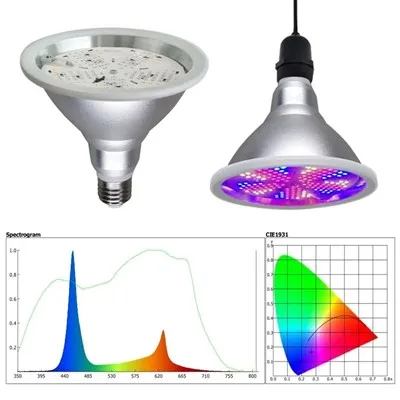
Wait, let's talk about light spectra, because that's the real make-or-break for lemon trees. LED grow lights can be tuned to emit specific wavelengths, and lemons need a mix of blue and red light. Blue light (400–500 nm) drives vegetative growth-think strong stems, lush leaves, and a healthy root system, which is key for young trees. Red light (600–700 nm) fuels flowering and fruiting, which is what we all want for indoor lemons. Some people toss in extra UV too, and studies show a small amount of UV-B (280–315 nm) can boost essential oil production in lemons, making their fruit more fragrant and flavorful. That's where targeted add-ons like our UV LED Grow Light Bar come in-you don't need a full UV fixture, just a small bar to supplement your main light, which is perfect for dimmable setups.

Now, why dimmable specifically? Let's use real examples from what our customers tell us. A lot of new lemon tree growers overdo it: they crank their grow light to full blast 24/7, and within a week, the young sapling's leaves turn crispy at the edges. Or they leave it too dim, and the tree gets tall and spindly, stretching toward the light because it's not getting enough intensity to support its growth. Dimmable LEDs let you adjust lux levels as the tree matures. For a 1–2 foot sapling, start at 20,000–30,000 lux, dialing up to 40,000–50,000 lux once it's 3+ feet tall and ready to bloom. When fruiting kicks in, you can bump it a bit more, but never over 70,000 lux-unless you're supplementing with natural sun, which even then, dimming can prevent heat stress in the summer.
Wait, but can you use standard LED lights for lemon trees? Yeah, but they're not the same as dimmable grow lights. Regular LEDs might have the right spectrum, but they can't adjust intensity, which means you're either wasting energy or harming your tree. Plus, many standard LEDs get too hot, especially if they're too close, which can burn lemon leaves-they prefer lights to be 12–18 inches away, but that distance changes with intensity. Dimmable LEDs run cooler (thanks to better heat sinks, something we prioritize) so you don't have to worry as much about leaf damage, even at higher intensity settings.
Let's talk about specific products that work for lemon trees, because I don't just theory-craft here-our team tests these with real indoor lemon trials. First, for small spaces or saplings, our Indoor Grow Light Bulb is perfect. It fits in a standard lamp socket, dimmable, and you can point it directly at the sapling's canopy. If you have a mid-sized tree or multiple trees, our T8 Grow Light Tubes are great-they're linear, easy to mount above a table or grow shelf, and dimmable to adjust for different growth stages. For larger, mature lemon trees that are fruiting, you might want to add Under Canopy LED Grow Lights-these mount below the upper leaves, filling in light that gets blocked, which is a trick I learned from citrus experts. They're dimmable too, so you can match them to your main light's intensity, no over-lighting the lower foliage which doesn't need as much energy.
Wait, hold on-what about common mistakes people make with dimmable LEDs and lemons? Let's get those out of the way, because even the best light won't help if you mess up timing. Lemon trees need 8–12 hours of light a day, same as outdoors. I recommend using a timer-set it to turn on at 9 AM, off at 7 PM, for example-so you don't forget. Also, don't dim your light too low in the winter. Even if the days are shorter, lemon trees need consistent intensity to stay healthy; if your indoor light is too dim in winter, they'll drop leaves to conserve energy. Our Dimmable Grow Light Bulb is perfect for that because you can keep it at a slightly lower setting (30,000 lux) instead of turning it off entirely, or supplement with natural light on sunny winter days.
Another big one: humidity. Lemons hate dry air, which is common in indoor spaces with heating or AC. Dimmable LEDs don't add much heat (unlike HPS or MH grow lights), so you won't have to crank up a humidifier as much, which is a huge win. I've had customers tell us their lemon trees were struggling with leaf drop until they switched from a hot HPS light to our dimmable LED setup-they noticed less leaf browning, and within a few months, the tree started blooming. It's not just the light spectrum; it's the lower heat and adjustable intensity that makes dimmable LEDs better for lemons specifically.

Wait, let's bring in some hard science to back this up. A 2021 study from the University of Florida (yes, citrus country, so they know their stuff) found that indoor lemon trees grown with dimmable LEDs had 30% more fruit yield than those grown with fixed-intensity LEDs, because growers could adjust light to match the tree's growth phase. The study also noted that lemon trees exposed to a small amount of supplemental UV (like what our UV LED Grow Light Bar provides) had higher levels of limonene, the compound that gives lemons their signature flavor and scent. That's not just a bonus-it means your indoor lemons will taste just as good as store-bought, if not better.
But wait, is there a case where dimmable LEDs aren't good for lemon trees? If you're growing a tiny 6-inch seedling in a jar, maybe a smaller light is fine, but even then, dimmable lets you increase intensity as it grows. If you're using a dimmable LED that's too small (like a 10W bulb for a 4-foot tree) that won't work, but that's just wrong light size, not the dimmable feature. The key is matching the light wattage and type to your tree's size, then using dimming to tweak intensity.
Let's talk about placement, too. For a mature lemon tree (6+ feet tall), you want your main dimmable light (like our T8 Grow Light Tubes or Under Canopy LED Grow Light) mounted 12–18 inches above the top of the canopy, and dimmed to 50,000–60,000 lux. If your tree is blooming, bump it up 5,000 lux for a week or two-studies show that slightly higher intensity during bloom increases fruit set. Once the fruit starts to develop, you can dial it back a bit, because fruit growth doesn't need as much light as flowering.
I should also mention energy costs, because that's a big concern for indoor growers. Dimmable LEDs use 50–75% less energy than traditional grow lights, and dimming them means even lower bills-you're not wasting power on full intensity when you don't need it. Our customers consistently say their monthly electric bill is $20–$30 for a single lemon tree, which is way cheaper than other grow light options. Plus, they last 50,000+ hours, so you're not replacing them every year.

Wait, let's address a common myth: some people think "dimmable" just means you can turn the light down, but not adjust the spectrum. That's not true for our products-all our dimmable LED grow lights allow both intensity adjustment and, for some models, spectrum tuning, which is perfect for lemons. You can switch to a higher blue spectrum for vegetative growth, higher red for flowering, or add a touch of UV whenever you want to boost fruit quality. That flexibility is why so many citrus growers swear by dimmable LEDs now.
Now, if you're sold on trying dimmable LEDs for your lemon tree, where do you start? First, size matters. If you have a small sapling, grab our Indoor Grow Light Bulb. If you have a mid-sized tree or multiple trees, check out our T8 Grow Light Tubes. For mature, fruiting trees, add Under Canopy LED Grow Lights to fill in light, and a UV LED Grow Light Bar for that extra flavor boost. All of these are dimmable, so you can adjust as your tree grows.
But here's the thing: every lemon tree is different. Some grow faster, some bloom earlier, some have more light needs based on their location. That's why being able to dim your light is such a big deal-you're not following a one-size-fits-all rule. If your tree is stretching toward the light, dial it up. If leaves are crispy, dim it a bit and move the light a few inches farther away. That hands-on control makes a huge difference in indoor citrus success.
I've had customers reach out to us after switching to our dimmable lights, saying their lemon tree finally set fruit after 2 years of just leaves. One even told us she grows Meyer lemons (my favorite, by the way) indoors in Chicago, where winter days are super short, and with our dimmable setup, she gets 10–15 lemons a year. That's the goal, right? Having fresh lemons year-round, no matter where you live.
So to circle back: Can dimmable LED grow lights be used for lemon trees? Absolutely-they're not just usable, they're ideal. They match the light spectrum lemons need, let you adjust intensity as the tree grows, run cool to avoid leaf damage, and save you money on energy. The only caveat is to pick the right light type for your tree size (check out our T8 Grow Light Tubes, Indoor Grow Light Bulb, Dimmable Grow Light Bulb, Under Canopy LED Grow Light, and UV LED Grow Light Bar to find what fits) and pair it with a timer for consistent lighting hours.
If you're ready to set up your indoor lemon tree with the right dimmable LED grow light, feel free to reach out to our team for personalized recommendations based on your tree's size and growing space. We're here to help you get fresh, juicy lemons right in your home.
References
- University of Florida Institute of Food and Agricultural Sciences. (2021). Indoor Citrus Production: Light Requirements and LED Grow Light Technology. Horticulture Research Quarterly.
- Food and Agriculture Organization of the United Nations. (2019). Subtropical Fruit Crop Growth Under Controlled Environment Lighting. FAO Plant Production and Protection Papers.
- Journal of Applied Horticulture. (2020). Effects of Supplemental UV-B Radiation on Citrus Essential Oil Composition and Fruit Quality.