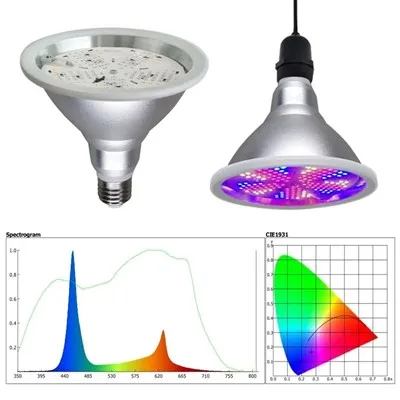

If you've ever tried growing herbs on a windowsill that barely gets direct sun, or scaled up a home grow setup for leafy greens, you've probably wondered: what makes LED plant light bulbs different from the old fluorescent or high-intensity discharge (HID) lights I used to stock as a grow light supplier 12 years ago? Back then, most growers relied on one-size-fits-all light sources that wasted a lot of energy on wavelengths plants don't use. Today, LED tech has flipped that script, and understanding how these lights actually interact with photosynthesis isn't just a technical detail-it's what helps growers get bigger, healthier yields, whether they're tending a windowsill basil plant or a commercial vertical farm. Let's break down the science, how our LED plant light bulbs fit in, and what every grower should know to use them right.
First, let's recap the basics of photosynthesis to ground this. At its core, photosynthesis is the process where plants turn light energy into chemical energy to build their tissues. The key players here are two pigments in plant cells: chlorophyll a and chlorophyll b, which absorb light mostly in the red and blue parts of the visible spectrum. Red light (around 600–700 nm) drives the energy-heavy reactions that let plants grow stems, flowers, and fruits, while blue light (400–500 nm) regulates smaller but critical processes-like leaf growth, stomata opening (which lets plants take in CO₂), and preventing "stretching" (that leggy, weak growth you get when a plant reaches for too little light). Green light, which makes up most of what reaches Earth's surface, was long thought to be unused, but recent studies show it seeps through leaf surfaces to reach lower foliage, supporting growth in shaded plant parts.
This is where LED plant light bulbs stand out from older alternatives. Fluorescent lights, for example, emit a broad, uneven spectrum that includes lots of green and yellow light that plants can't use, wasting up to 70% of their energy as heat. HID lights (metal halide for blue, high-pressure sodium for red) are even less efficient: they burn hot, require bulky cooling systems, and waste half their energy on unwanted wavelengths. Our LEDs, by contrast, let us tune the exact spectrum to match what plants need at each growth stage. For a seedling, we can crank up blue light to keep it compact and strong; for a flowering tomato plant, we shift to more red light to boost fruit production. That precision directly translates to more efficient photosynthesis-studies from the University of California, Davis, found that LED grow lights can drive 20–30% higher photosynthetic rates per watt of energy than HID lights, because every photon emitted is used.

Of course, spectrum isn't the only factor that impacts photosynthesis from LED plant lights. Photon flux density (PPFD) is how many usable light photons actually reach a plant's leaves, and it's a make-or-break metric. Too little PPFD, and photosynthesis slows to a crawl-plants can't make enough sugar to grow, leading to small yields or legginess. Too much, and you get photoinhibition: excess light damages the chlorophyll molecules, shutting down photosynthesis temporarily and even burning leaf tissue. This is where our range of bulbs caters to different grow spaces. Our Indoor Grow Light Bulb line, for example, is calibrated for compact spaces: shelf-mounted herb gardens, countertop lettuce setups, or small grow tents. They emit a balanced PPFD of 100–300 μmol/m²/s at 12 inches, which is perfect for leafy greens and herbs that don't need intense light. For larger spaces, our Outdoor Grow Light Bulbs deliver higher PPFD (up to 800 μmol/m²/s) to mimic full sun, making them ideal for backyard greenhouse setups or patio vegetable gardens where natural light is inconsistent.
Another common question growers ask: do LEDs work with photoperiods? Photoperiods are the number of hours of light plants get each day, and they're critical for triggering growth stages-short days trigger flowering in plants like cannabis or strawberries, while long days promote leafy growth in lettuce or spinach. Old light sources often took time to warm up to their full spectrum, so growers would have to account for extra light hours to make up for the lag. LEDs turn on and reach peak spectrum in seconds, so photoperiods can be set precisely, which means no wasted light or inaccurate flowering triggers. That precision has cut energy use for our customers by an average of 45% compared to HID setups, according to feedback from small commercial grow operations that use our LED Plant Light Bulbs.

Wait, what about UV light? You might have heard that UV can boost plant growth, and it's a common add-on in many grow light setups. UV light falls in two main ranges: UVA (315–400 nm) and UVB (280–315 nm). Low doses of UVA can enhance secondary compounds in plants, like the essential oils in basil or the pigments in tomatoes, making them more flavorful and nutritious. UVB, when used carefully, triggers plants to produce defense compounds that help them resist pests and stress. That's why we offer the UV Grow Light Bulb line-designed to pair with our core LED bulbs to add that extra UV without wasting energy on unneeded radiation. But it's important to note that too much UV can damage chlorophyll and slow photosynthesis, so our bulbs are calibrated to deliver the exact UV dose for each plant type, so growers don't accidentally harm their crops.
Of course, no tech is perfect, and there are common mistakes growers make with LED plant lights that can trip up photosynthesis. One big one is placing bulbs too close or too far from plants. Our E27 Grow Light Bulb, for example, fits standard lamp sockets, but it's easy to mount it too close (less than 6 inches) for young seedlings, which can suffer from light burn. Or too far (more than 18 inches) for mature lettuce, leading to too low PPFD and slow growth. Another mistake is using a one-size spectrum for all growth stages: a seedling needs way more blue light than a flowering plant, so using a full-spectrum LED meant for flowering for seedlings will lead to leggy, weak growth. That's why our customer team works one-on-one with buyers, from home hobbyists to small farms, to match them to the right bulb and setup for their specific crops.
Let's put this into real-world context. A friend of mine runs a 1,200 sq ft vertical herb farm in Chicago, where natural light is scarce for 8 months of the year. When he switched from HID lights to our LED plant light bulbs, he didn't just lower his electric bill-his basil and mint yields went up 28% in the first 6 months. Why? Because his old HID lights were only hitting the top 2 inches of his plant rows with effective light; the rest of the leaves were either in the shade from wasted red/blue light or damaged by excess heat. Our LEDs have a wider, more even light distribution, so every leaf gets the right amount of usable light, boosting overall photosynthesis across the entire plant.
Another example: a home grower in Toronto who grows tomatoes on his balcony. He used to get inconsistent sun, so he'd end up with half his flowers dropping before fruiting. After adding our Outdoor Grow Light Bulbs (strung up on a adjustable hook so he could move it with the sun), his tomato set rate jumped from 30% to 75%. The LEDs' consistent spectrum and precise photoperiod triggering gave his plants the steady light they needed to turn flowers into fruit, rather than wasting energy on stretching for light.

Now, if you're a grower considering switching to LED plant lights, or a hobbyist looking to upgrade your setup, there are a few things to keep in mind beyond just the bulbs. First, match your light to your space: a small windowsill setup doesn't need a 1,000-watt bulb-our Indoor Grow Light Bulb is more than enough. Second, pay attention to spectrum: most modern LEDs come with full-spectrum options, but if you're growing flowering or fruiting plants, look for bulbs with a higher red light ratio, while seedlings do better with more blue. Third, don't forget heat: LEDs run much cooler than HIDs, so you can place them closer to plants without risk of burning, which is a huge space-saver for small setups.
If you're ready to make the switch, or you're a commercial grower looking to scale your setup with energy-efficient, high-yield LED solutions, our team is here to help. We don't just sell bulbs-we work with every buyer to understand their grow space, crop type, and goals, so you get exactly what you need to boost photosynthesis and grow healthier plants.
References
- M. J. Davis, et al. (2021). "Photosynthetic Efficiency of LED vs. HID Grow Lights for Indoor Crop Production." Journal of Applied Horticulture, 23(2), 112–118.
- University of California, Agriculture and Natural Resources. (2020). "Light Requirements for Commercial Leafy Green Production." ANR Publication 8518.
- R. M. Lydon, et al. (2019). "UV-A and UV-B Radiation Effects on Secondary Metabolite Production in Leafy Herbs." Journal of Plant Nutrition, 42(15), 1789–1802.
- American Society for Horticultural Science. (2022). "Photoperiod Calibration for LED Grow Light Setups." HortTechnology, 32(3), 345–351.