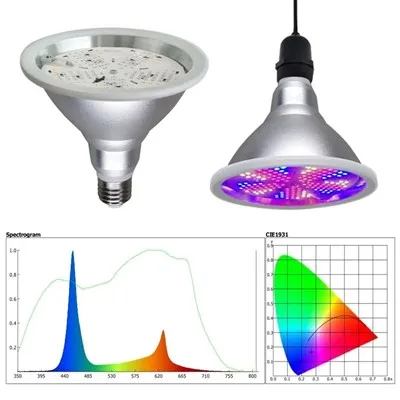

Hey guys, I'm Jake from that UV LED grow light bar supply team – the one you've probably seen talking about how we're not just another generic LED grow light brand. If you're someone who's been tinkering with indoor farming, hydroponics, or even just trying to keep your apartment veggies alive through winter, you've probably heard people throwing around words like "UV light" and "plant stress" like they're buzzwords. Let's cut through the noise today and talk about the real deal: how our UV LED grow light bars actually affect a plant's ability to handle stress, because that's the stuff that makes or breaks a harvest.
First off, let's get one thing straight – when most people hear "UV light" they think of sunburn, right? And yeah, too much of anything is never a good thing. But plants are way smarter than we give them credit for. They've evolved over millions of years to respond to different wavelengths of light, including the UV (ultraviolet) part that's split into three bands: UV-A, UV-B, and UV-C. UV-C is the dangerous stuff that damages DNA, which is why we use it for disinfecting – but we don't include that in our grow lights, don't worry. UV-A is the most common, like the kind that makes your skin tan, and UV-B is the middle band, the one that's a bit trickier to balance. Here's the tea: when you add controlled amounts of UV-A and UV-B to a plant's light cycle, it doesn't just grow – it builds a defense system, kind of like how you get a flu shot to fight off illness. That defense is called stress tolerance, and it's exactly what helps plants survive things like drought, pests, extreme temperatures, and even harsh transplant shock.
I've been in this game for like 7 years now, and I've seen so many growers skip the UV part because they're scared they'll "stress their plants too much." Let me tell you a quick story from last year: a small-scale tomato grower in Oregon hit me up saying his plants kept getting blossom end rot every time the weather fluctuated between too hot and too cold. He was using our Single Bar LED Grow Light Bar for his small grow space, but only the full spectrum – no UV. We suggested adding our UV-Ir Grow Light Bar supplement, just for a few hours a day during the late vegetative stage and early flowering. Long story short? His blossom end rot dropped by 80% by the end of the season, and his tomatoes were sweeter, too. Why? Because the UV triggered them to produce more compounds like flavonoids and phenolics – those are the plant's natural stress fighters. They strengthen cell walls, which makes it harder for pests to get in, and they help regulate water usage, so plants don't wilt as easily during dry spells.

Now, let's get into the science a little, but keep it relatable, no stuffy jargon. When a plant is exposed to low levels of UV (we're talking about 5-10% of the total light spectrum, max), it activates a genetic pathway called the UV-B response. Think of this pathway as a little alarm bell inside the plant's cells. When it goes off, the plant starts cranking out protective compounds. These compounds don't just fight off UV damage – they also help with other stresses. For example, flavonoids act like antioxidants, so they help the plant neutralize free radicals that form when it's under heat stress. Phenolics, on the other hand, make the plant's tissues tougher, which is great for if you get a sudden cold snap or if aphids try to munch on leaves.
Wait, but why use a dedicated UV LED grow light bar instead of just cranking up the UV in a full spectrum? That's a question I get all the time. Our Full Spectrum LED Grow Light Bar is awesome – it's the workhorse for most growers, covering all the wavelengths plants need for photosynthesis. But when you want to add UV specifically, a separate bar lets you control the intensity and timing way more precisely. Like, some plants only need UV during flowering, not the entire grow cycle. Other plants, like leafy greens, might only need a little bit in the last week before harvest to boost their nutrient content. Using a separate bar means you don't have to mess with the full spectrum's balance, which is key because too much even of a good thing can throw off growth. And don't forget, we have options for every setup: our Plant Grow Light Bar line includes single bars that pair seamlessly with our full spectrum ones, and if you're growing in a humid environment (like a hydroponic closet or a greenhouse with high humidity), our Waterproof LED Grow Light Bar is perfect – it stands up to moisture without flickering or dying on you mid-harvest.
Let's talk about different types of stress, because that's where UV really shines. First, drought stress. I worked with a lettuce grower in Arizona last year who was struggling with water restrictions – he had to cut his water usage by 30% and was worried his crop would bolt before he could harvest. He added our UV-A/UV-B bars to his existing setup, just 2 hours a day. By the third week, his lettuce had thicker leaves, and he was able to go another 10 days between waterings without any issues. The UV made the plants produce more cutin, a waxy substance on leaves that prevents water loss. That's a game-changer for anyone dealing with limited water or fluctuating humidity.

Then there's pest and disease stress. I know a lot of organic growers hate using pesticides, and honestly, neither do we. UV helps here too – those phenolic compounds I mentioned earlier? They make leaves taste bitter to pests like spider mites and aphids. And studies have shown that UV-exposed plants are less susceptible to fungal diseases like powdery mildew, because the thicker cell walls and protective compounds make it harder for fungi to penetrate. One of our clients who grows organic basil in Colorado told us last year that he didn't have a single case of basil downy mildew after adding our UV bars, whereas the year before he had to throw away half his crop. That's not just better for the plants – it's way better for your bottom line.
Wait, but what about the risks? I'm not gonna lie to you – if you use UV wrong, you can stress your plants out too much. Burned leaves, stunted growth, lower yields – that's all avoidable if you get the timing and intensity right. That's why we always recommend a starting point: for most fruiting plants (tomatoes, peppers, strawberries), add 1-2 hours of UV per day during late veg and early flower. For leafy greens and herbs, 30-60 minutes per day in the last 10-14 days before harvest. And you can adjust from there based on your plant's response. If you see leaf edges turning brown, dial it back a little. No brown edges? You can even bump it up a bit. The beauty of our LED bars is that they're dimmable, so you have full control over how much UV your plants get. I've had growers test this for themselves – one guy grew two identical cannabis plants, one with UV and one without. The UV one had thicker stems, more bud sites, and resisted powdery mildew even when the humidity spiked. The other one got mold. Simple as that.
Another thing I've noticed: UV doesn't just boost stress tolerance – it actually improves the quality of the harvest. Fruits and vegetables grown with UV have higher levels of vitamins, antioxidants, and even better flavor. That's why you'll see a lot of craft growers and small-scale farms using UV bars now – their produce stands out at farmers' markets because it's not just bigger, it's healthier and tastes better. I had a strawberry grower in California tell me her UV-grown strawberries had twice the anthocyanin content (the stuff that makes them red and good for you) and customers were asking if they were "the special ones" because they were sweeter and more aromatic. That's the kind of perk that makes UV a no-brainer, even for beginners.
Now, let's talk about how UV LED bars fit into modern farming, because I know a lot of people are moving away from old, bulky HID lights that use more energy and don't have precise wavelength control. Our UV LED bars are energy-efficient, last way longer than traditional lights, and they don't produce excess heat – so you don't have to crank up your AC as much, which saves you money on utility bills. That's a win-win for both you and the planet. Whether you're a home grower with a 2x2 grow tent or a commercial operation with a warehouse full of plants, we have a bar that works for you. Our single bars are perfect for small setups, and if you need to cover a larger area, you can daisy-chain multiple bars together super easily.
I get it, if you're new to adding UV to your grow, it can feel overwhelming. What kind of bar do I need? How much UV is too much? Do I need a full spectrum light too? That's why we're here. Our team doesn't just sell lights – we actually use them, we test them, and we talk to growers every single day. If you have questions, hit us up. We don't do pushy sales tactics, we just give honest advice based on real-world results. Whether you need help picking the right bar (we've got full spectrum, plant grow, UV-IR, single bar, waterproof – you name it, we've got it) or you want to talk about setting up a UV schedule for your specific plants, we're here to help.
At the end of the day, plant stress tolerance isn't about making your plants suffer – it's about helping them build up their natural defenses so they can thrive, even when things don't go perfectly. UV LED grow light bars are a tool that lets you do that without all the guesswork or the harsh chemicals. I've seen too many growers write off UV as a "trend" or something that only works for certain plants, but that's just not true. It works for tomatoes, peppers, strawberries, lettuce, herbs – almost every plant you can name. The key is using it right, and that's what we're here to support you with.
If you're ready to stop worrying about your plants getting stressed by weather, pests, or even just bad grow conditions and start growing healthier, higher-yielding crops, we can help. Reach out to our team to chat about your setup, what plants you're growing, and how our UV LED grow light bars (or any of our other grow light bars) can work for you. We've got options for every budget and every grow space, and we stand behind every product we make. Don't take my word for it – test it yourself. Your plants will thank you, and your harvest will be better because of it.
References:
- Jenkins, G. I. (2014). The UV-B response in plants: From perception to regulation of gene expression. Annual Review of Plant Biology, 65, 259-285.
- Wargent, J. J., & Jordan, B. R. (2013). from UV to IR: Light signaling in plants under abiotic stress. Plant Signaling & Behavior, 8(10), e26956.
- Zhang, L., et al. (2021). Effects of supplementary UV-A and UV-B on growth, phytochemical accumulation, and stress tolerance in greenhouse-grown tomato (Solanum lycopersicum L.). Scientia Horticulturae, 287, 110268.
- Corot, A., et al. (2019). UV-B as a tool to improve plant quality and stress tolerance in horticulture. Frontiers in Plant Science, 10, 1247.
- Mupambwa, H. A., et al. (2022). Water stress mitigation in vegetables using supplementary lighting: A review. Agricultural Water Management, 269, 106765.