
If you've ever walked into a commercial space, a retail store, or even a residential home, and noticed that two adjacent G12 LED bulbs look slightly off-one with a warm yellow tint, the other leaning cool blue-you've encountered the core challenge of color consistency in LED lighting. As a G12 LED bulb supplier, I get asked this question all the time, and it's one that goes far beyond just "pick a color temperature" on a product page. Color consistency isn't just a nice-to-have; it's what makes commercial lighting work for displays, restaurants, and offices, and what makes residential lighting feel intentional, not patchy. To understand what color consistency means for G12 LED bulbs, we have to break down the science, the industry standards, and how we, as a supplier, build that consistency into every bulb we ship.
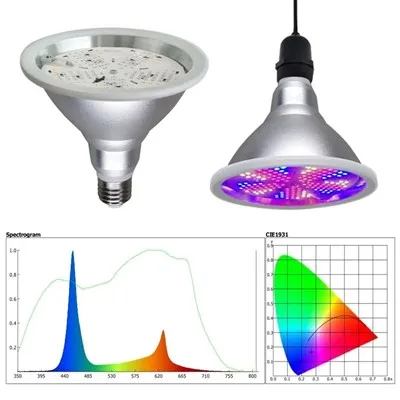
First, let's define what "color consistency" actually refers to in lighting terms. When you talk about a white light bulb, color is measured by its correlated color temperature (CCT), which is listed in Kelvins (K)-think 2700K for warm, cozy light, 5000K for bright daylight, or 3500K for a neutral middle ground. But CCT alone doesn't tell you how consistent a batch of bulbs will look. That's where color tolerance, measured in MacAdam ellipses (often just called MacAdam steps), comes in. A MacAdam ellipse is a way to plot color on a 2D graph called the CIE 1931 chromaticity diagram, where each ellipse represents a range of colors that the human eye can barely tell apart. Most reputable LED manufacturers (and that includes us, as a G12 LED corn bulb and G12 LED bulb supplier) target color consistency within 2 MacAdam steps for commercial applications, and sometimes even 1 step for high-end projects. To put that in perspective: a 2-step bin means two bulbs from the same batch will look nearly identical, while a 5-step bin might have a noticeable tint difference when placed side by side.
For G12 LED bulbs, this is especially critical because of their design. G12 is a standard base type, most commonly used in linear fixtures, high-bay lighting, and commercial display cases-spaces where multiple bulbs are used in close proximity. If you've ever shopped at a store where the mannequins looked like they had yellow skin next to cooler ones, that's a color consistency issue in the bulbs used for the display. The same goes for offices where employees might get headaches from unevenly lit desks, or restaurants where food looks unappetizing under mismatched light. So how do G12 LED bulbs achieve that level of consistency? It starts with the binning process, which is the industry term for sorting LEDs by their color and brightness before they're assembled into bulbs.

At our facility, we don't just buy off-the-shelf LED chips and throw them into a G12 E12 LED bulb or 15W G12 LED lamp. We work directly with chip manufacturers to source chips that fall into tight color bins. Binning is a precision process that tests every single LED for CCT, color rendering index (CRI), and brightness, then groups them into categories. For example, if we're making a batch of 3000K G12 LED bulbs, we might only use chips that fall within the 2700K to 3000K range, and then further sort those to ensure their color coordinates are within 2 MacAdam steps of each other. This cuts down on variation, but it's not the only step-how the chips are soldered, the phosphor coating used to convert blue light from the chip into white light, and even the driver that powers the bulb all impact color. That's why every G12 LED bulb from our line goes through a final quality check after assembly, to make sure it matches our strict consistency standards before it leaves our warehouse.
Now, let's talk about what affects color consistency over time, because it's not just about new bulbs. LEDs degrade, and their color can shift as they age. For G12 bulbs, which are often used in hard-to-reach places like high ceilings or warehouse fixtures, you don't want to replace them every year because their color changes. Good LED manufacturers design their bulbs to minimize color shift, measured as delta E (ΔE) over the lifespan of the bulb. Delta E is a number that quantifies the difference between two colors; a delta E of less than 1 is imperceptible to the human eye, while a delta E of 3 is noticeable. Top-tier G12 LED bulbs will have a delta E of less than 2 over 50,000 hours of use-meaning even after years of operation, they'll look the same as the day they were installed. We test our G12 LED corn bulb and 15W G12 LED lamp in accelerated aging chambers to simulate thousands of hours of use, and we've found that our bulbs maintain their color well within that range, which is why many of our clients rely on us for long-term commercial projects.

It's also important to distinguish between different G12 bulb variants, because not all G12 bulbs are created equal when it comes to color consistency. For example, the G8.5 LED bulb light is a smaller, more compact variant, often used for track lighting or under-cabinet fixtures, while full-size G12 bulbs are used for larger spaces and higher wattage. The phosphor coating and chip layout differ slightly between these models, so our binning process is adjusted accordingly to ensure consistent color across each line. A common mistake buyers make is assuming all G12 bulbs have the same color consistency, but in reality, cheaper models from unvetted suppliers might use lower-quality chips and skip the rigorous binning process, leading to wide color variation. As a G12 LED bulb supplier, we prioritize transparency with our clients-we provide color bin data for every batch, and we're happy to share test results that show our color consistency metrics, so our customers know exactly what they're getting.
Another factor that plays into color consistency is the application. If you're using G12 bulbs for a retail clothing store, you need a higher CRI (color rendering index) than if you're using them for a warehouse. CRI measures how accurately a light source renders the true colors of objects, on a scale from 0 to 100. A CRI of 80 is standard for most general lighting, but for retail, art galleries, or restaurants, you'll want a CRI of 90 or higher. We offer G12 LED bulbs in both CRI 80 and CRI 90 options, and our binning process is adjusted to maintain color consistency regardless of CRI. This means if you're installing 20 G12 bulbs in a clothing boutique, all of them will render the blue of a jacket or the red of a dress the same way, without one looking faded or oversaturated.
I've seen firsthand what happens when color consistency is overlooked. A few years ago, we had a client who bought a batch of G12 bulbs from a supplier that cut corners on binning, and within six months, half the bulbs had shifted to a cooler color. They were installing the bulbs in a gym, and members complained that the walls looked like two different shades when they walked from one side of the gym to the other. That cost the client thousands in rework and lost revenue, and it's the kind of problem we work hard to help our customers avoid. When you choose a reliable G12 LED bulb supplier, you're not just buying a light bulb-you're buying consistency, reliability, and peace of mind that your lighting will perform as expected, even in high-traffic, long-use environments.
Now, let's address a common question: is color consistency only important for commercial applications? Not at all. Residential users also deal with this, especially when they replace old bulbs. If you've ever bought a "match pack" of LED bulbs only to find that some look warmer or cooler than others, that's a lack of color consistency. Our G12 E12 LED bulb, which is often used in pendant lights or table lamps, is designed to be consistent enough that you can replace a single bulb years later and it won't clash with the others in the room. That's why we offer residential clients the same rigorous testing and binning as we do for commercial partners-good lighting shouldn't have a "patchwork" look, no matter where it's installed.
As LED technology continues to evolve, color consistency is only going to get better. New phosphor materials and more precise chip manufacturing processes are leading to even tighter MacAdam step bins and lower delta E values. But at the end of the day, the level of color consistency depends on the supplier's commitment to quality. When you're shopping for G12 LED bulbs, look for a supplier that doesn't just list CCT and wattage on their product pages-look for details about their binning process, delta E ratings, and CRI metrics. That's what sets a reliable supplier apart from the rest.
If you're planning a project that requires G12 LED bulbs, whether it's a commercial fit-out, a warehouse upgrade, or residential lighting refresh, our team is here to help. We can provide sample bulbs for testing, share detailed color consistency data, and work with you to find the right G12 LED corn bulb, 15W G12 LED lamp, G12 LED bulb, G12 E12 LED bulb, or G8.5 LED bulb light for your needs. We understand that lighting is a critical part of any space, and color consistency is key to making it look and feel right. So if you're ready to discuss your lighting project, don't hesitate to reach out to our team to learn more.
References
- International Electrotechnical Commission (IEC). (2020). IEC 62612: Self-ballasted LED lamps for general lighting services – Performance requirements. Geneva, Switzerland: IEC.
- Commission Internationale de l'Eclairage (CIE). (1978). CIE 1931 chromaticity diagram and MacAdam ellipses. Vienna, Austria: CIE.
- US Department of Energy. (2022). LED Lighting Facts Program: Color Consistency Requirements. Washington, DC: US DOE.
- General Electric Lighting. (2021). "LED Binning and Color Consistency: Best Practices for Commercial Applications." Lighting Industry Journal, 45(3), 12-18.