
When you're running a small indoor garden, setting up a grow room for commercial clones, or fine-tuning a vertical farm, one of the most common questions I get as a foldable LED grow light supplier is: "How much power does this thing actually use?" It's not a trivial question. Power bills can make or break a grow operation-whether you're tending to a dozen houseplants or 1,000 cannabis clones. Over the years, I've talked to dozens of hobbyists and commercial growers who've skipped checking power consumption only to get hit with a shockingly high utility bill, or who've bought a "high-power" light that underperformed because its power draw was misrepresented. Today, I'm breaking down exactly how foldable LED grow lights consume power, what factors change that number, and how to calculate it for your specific setup.
First, let's start with the basics. A foldable LED grow light isn't just a straight bar or panel-it's a set of LED diodes mounted on hinged arms that you can adjust to sit close to your plants when they're young and pull back as they mature. That design flexibility is one of the biggest draws of these lights, but it also affects power consumption in ways many new growers don't realize. Unlike old HPS (high-pressure sodium) or MH (metal halide) lights, which waste a ton of energy as heat, LEDs convert most of their power into usable light for photosynthesis. But that doesn't mean all foldable LED lights are created equal when it comes to power draw.

Let's talk about the core component here: the LED diodes themselves. Most quality foldable grow lights use either full-spectrum diodes or specialized diodes that cover the red and blue wavelengths plants need most, plus sometimes UV and IR for flowering. The number of diodes, their efficiency, and the driver that powers them all play a role in how much electricity they use. For example, a 100-watt foldable light will draw around 100 watts of power from the wall, right? Not so fast. That's the "output wattage" rated by the manufacturer, but the "actual power consumption" is measured in watts (W) when the light is running at full power. You'll often see this listed as "input wattage" on the product spec sheet, and that's the number you need to use for calculating your electricity costs.
Take a quick example: our most popular foldable model has an input wattage of 300W. That means if you run it for 10 hours a day, you're using 3 kWh (kilowatt-hours) of electricity each day. At a typical US electricity rate of $0.15 per kWh, that's $0.45 per day, or about $13.50 per month. Compare that to a comparable HPS light, which might pull 600W and cost twice as much to run, and you can see why LED foldable lights are so popular. But wait-what if you don't run the light at full power? Most foldable lights have dimmable settings, which let you lower the wattage to match your plants' growth stage. A light set to 50% power will draw roughly half its rated input wattage, so you can cut your power costs in half for the vegetative stage, when plants don't need as much intense light as they do during flowering.
Now, let's get into the factors that affect power consumption, because it's not just about the rated wattage of the light. First, there's the number of arms and diodes. A 2-arm foldable light will have fewer diodes and lower power draw than a 4-arm model, which is designed for larger grow spaces. For example, our entry-level foldable light has 200W input wattage, ideal for a 2x2ft grow tent, while our commercial model has 600W input wattage, made for a 4x4ft or larger space. The tradeoff here is clear: bigger grow spaces need more light, which means more power-but LEDs are still way more efficient than traditional alternatives.
Another factor is the type of LEDs used. Not all full-spectrum LED grow lights are the same, and their efficiency translates directly to power consumption. A high-quality Samsung or Osram diode will convert more of the power it uses into usable light for plants, so you get more PAR (photosynthetically active radiation) per watt, which means you don't need to run the light at full power to get the same results as a lower-quality diode. That's why it's worth investing in a reliable foldable light from a reputable supplier-skimping on price to save a few bucks upfront can end up costing you more in power bills over time, because you'll have to run the light longer or at higher wattage to make up for weak diodes.
Also, don't forget about accessories and add-ons that can increase power draw. If you add external cooling fans, a carbon filter, or a grow tent ventilation system to your setup, those will add to your overall power consumption. A lot of new growers only calculate the power of their grow light and forget about these peripheral devices, leading to a lower total power cost than they expected. It's a good idea to list out every device you'll be running in your grow space and add up their input wattages to get a full picture of your monthly electricity use.

Now, let's talk about how to measure power consumption accurately. The easiest way is to use a watt meter, which plugs between your light's power cord and the wall outlet. This will give you a real-time reading of how much power the light is actually using, not just the rated wattage. Some lights will draw slightly less power when they're first turned on, as their drivers stabilize, so running the watt meter for a few minutes will give you an accurate average. This is especially useful if you're dimming your light, because the wattage will fluctuate with the dim level, and the watt meter will show you exactly how much you're using at each setting.
Let's also address a common misconception: higher wattage doesn't always mean better performance. I've had growers come to me saying, "I have a 1000W HPS light that works great-why should I switch to a 600W LED?" The answer is efficiency. A 600W LED will produce more usable PAR than a 1000W HPS, so you can actually use less power and get better plant growth. For a foldable LED grow light, that's a huge advantage because you can adjust the number of arms or the dim level to match your grow space, so you're not wasting power on light that your plants can't use. If you're looking for a full-spectrum option that's optimized for both vegetative and flowering stages, check out our Full Spectrum LED Grow Light Bar, which is designed to complement our foldable lights and give you even more control over your grow's light spectrum.
Another point to consider is the lifespan of the light. While it's not directly power consumption, a longer-lasting LED light will save you money in the long run because you won't have to replace it every year like you would with HPS or MH lights. Most quality foldable LED grow lights have a lifespan of 50,000 to 100,000 hours, which means if you run the light 12 hours a day, it will last over 10 years. Compare that to an HPS light, which only lasts about 10,000 hours, and you can see how the upfront cost of an LED light pays off over time-especially when you factor in lower power bills.
Now, let's talk about specific use cases to make this concrete. If you're a hobbyist with a 2x2ft grow tent growing herbs like basil or small tomatoes, a 200W foldable LED grow light will be more than enough. It will draw about 200W when running at full power, so if you run it 12 hours a day, that's 2.4 kWh per day, or $0.36 per day at $0.15 per kWh, which adds up to about $10.80 per month. For a small setup, that's totally manageable. If you're growing larger plants like peppers or needing to cover a 3x3ft space, a 400W foldable light is a good fit, with a monthly power cost of around $21.60 for 12 hours a day.
For commercial growers with a 4x8ft grow room or a vertical farm with multiple layers of plants, you might need multiple foldable LED grow lights, each with 600W input wattage. Even with four lights running 12 hours a day, that's 28.8 kWh per day, or $4.32 per day, which is manageable when you consider the higher yield you'll get from using efficient LED lights. Of course, commercial growers can also take advantage of time-of-use electricity rates, where power is cheaper during off-peak hours, so running your lights during those times can cut your power costs even more.
I also want to mention adjustable LED Grow Lights, which are similar to foldable lights but have different adjustment mechanisms that can also affect power consumption. Many of our adjustable models let you change the distance between the light and the plants with a simple hinge or telescoping arm, which not only gives you better light distribution but also allows you to optimize power use by running the light at a lower wattage when it's closer to the plants. That flexibility is one of the reasons these lights are so popular among growers who want to adapt their setup as their plants grow.
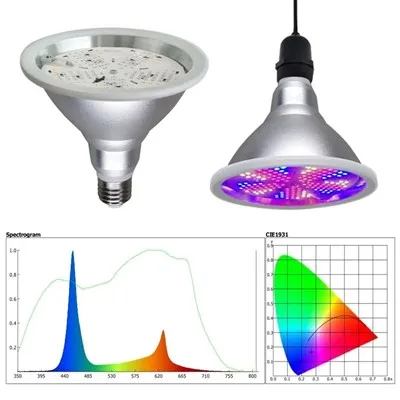
Now, let's clear up another common question: do foldable LED grow lights use less power than other types of LED lights, like LED plant light bulbs or T8 Grow Light Tubes? The short answer is yes, but it's not that simple. A single LED plant light bulb might only use 10W, which is great for small spaces or supplementing natural light, but it won't give enough power for a full grow room. T8 grow light tubes are another option, usually used for clones or seedlings, with input wattages between 20W and 40W per tube. They're efficient, but they don't have the same power or coverage area as foldable lights, so for most medium to large grows, foldable LEDs are a better balance of power, coverage, and flexibility. If you're looking for a supplementary light for your seedlings or a small shelf grow, the LED Plant Light Bulbs are a great option, but they're not a replacement for a full foldable grow light for large-scale grows.
Another specialized option we offer is UV IR Grow Light Bar, which adds extra UV and IR wavelengths to your full-spectrum light to boost flowering and resin production. These bars are designed to be used alongside your main foldable grow light, and they add a small amount of power-usually 50W to 100W. While they do increase your total power consumption, the improvement in yield and quality makes them a worthwhile investment for many growers, especially those cultivating high-value crops like cannabis or specialty flowers.
Now, let's talk about ways to reduce power consumption even more, because I know every grower is looking to cut costs where they can. First, use a timer to automate your light schedule, so you don't accidentally run the light longer than needed. Plants need different light cycles depending on their stage-18 hours of light for vegetative growth, 12 hours for flowering-and a timer ensures you're only running the light when your plants need it. Second, keep your grow space well-ventilated. LED lights produce less heat than traditional lights, but they still generate some, and if the space gets too hot, you might have to run your fans more, which increases power use. Proper ventilation also helps your plants grow better, so it's a win-win. Third, clean your light regularly. Dust and dirt can build up on the LEDs over time, reducing their efficiency, which means you have to run them at higher wattage to get the same amount of light. A quick wipe down with a soft cloth every month will keep your light performing at its best, saving you power in the long run.
I've seen firsthand how understanding power consumption can make or break a grow operation. A few years ago, I worked with a commercial grower who had a setup of outdated LED lights that were inefficient, and he was shocked when his first power bill came in at $1,200 a month. We switched him to our foldable LED grow lights, and with their higher efficiency, his power bill dropped to under $700 a month-all while increasing his yield by 20%. That's the kind of difference choosing the right light can make, and it's why I always take the time to walk growers through the power consumption details, no matter if they're a hobbyist with a small closet grow or a commercial farmer with a 10,000 sq ft facility.
If you're still unsure about how much power your foldable LED grow light will use, or if you need help choosing the right light for your grow space, don't hesitate to reach out to our team. We have years of experience working with all types of growers, and we can help you calculate your expected power costs, match you with the right light for your needs, and answer any questions you have about power consumption, light efficiency, or our products. Whether you're interested in our foldable full-spectrum models, adjustable lights, or specialized UV IR bars, we're here to help you build a setup that works for your budget and your plants.
References:
- LED Lighting Development Center. (2022). "Energy Efficiency of LEDs for Horticultural Applications." Journal of Sustainable Agriculture and Food Systems.
- International Energy Agency. (2023). "The Future of LED Lighting in Commercial and Residential Spaces." IEA Technology Roadmap.
- American Society for Horticultural Science. (2021). "PAR and Power Consumption: Optimizing LED Grow Light Performance for Indoor Agriculture." HortScience.
- United States Department of Energy. (2022). "Energy Savings from LED Lighting in Commercial Buildings." DOE Commercial Building Energy Alerts.
- Growers Association of North America. (2023). "Best Practices for Calculating Grow Light Power Consumption and Cost." GANA Industry Guide.