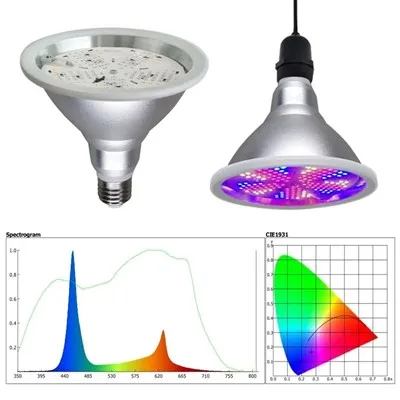

If you're running a commercial grow operation, or even a dedicated indoor garden enthusiast, you know adjustable LED grow lights aren't just a "set it and forget it" tool. One of the most critical skills for maximizing plant health, energy efficiency, and yield is knowing how to dim these lights properly-and as someone who's spent years designing and supplying adjustable LED grow lights, I've seen firsthand how a poorly executed dimming strategy can derail even the most careful growing plans. Whether you're fine-tuning light for young seedlings, delicate flowers, or mature fruiting plants, dimming isn't just about turning the brightness down; it's about aligning light intensity with your plants' specific growth stages, light requirements, and your setup's unique needs. Let's break down the science behind dimming adjustable LED grow lights, the most reliable methods for doing it right, and common mistakes to avoid.
First, it's important to understand why dimming matters beyond just conserving electricity. Photosynthesis, the process that turns light into energy for plants, relies on a specific range of light intensity (measured in PPFD, or Photosynthetic Photon Flux Density) to be effective. Too much light, and plants can suffer from photoinhibition-damaged leaf cells, stunted growth, or burned foliage-especially during early growth stages when their leaves are small and sensitive. Too little light, and they become leggy, weak, and unable to produce buds or fruit as vigorously. Dimming also helps manage your grow space's temperature and humidity: higher light levels generate more heat, so adjusting brightness down during the hottest parts of the day (or during heatwaves in your grow room) can prevent overheating that stresses plants or increases the risk of mold and pests.
When I work with growers who are new to adjustable LED lights, the first question I get is which dimming method is best. Not all dimming options are created equal, and some work better with different types of grow lights than others. Let's start with the most common and reliable methods, especially for the adjustable LED grow lights we supply.
PWM (Pulse Width Modulation) dimming is one of the most widely used and high-quality options in commercial grow lights, and it's the method we build into most of our adjustable models. PWM works by rapidly switching the light on and off at a frequency too fast for the human eye to detect (usually between 100Hz and 10,000Hz) while adjusting the ratio of "on" time to "off" time. For example, a 50% PWM dimming setting means the light is on half the time and off half the time, resulting in 50% of the total light output. The big advantage of PWM is that it doesn't alter the light's color spectrum-unlike some other dimming methods, which can shift the balance of red, blue, and UV light that plants need. That's crucial because spectrum directly impacts different growth stages: seedlings need more blue light to grow sturdy stems, flowering plants benefit from extra red light, and some crops (like tomatoes or cannabis) require targeted UV exposure to boost cannabinoid or nutrient content. If you're using lights that include spectrum-specific components, like UV LED Grow Light Bar or Multi Colour Tube Light, PWM dimming ensures you don't mess up that delicate balance.
Another method is 0-10V dimming, which is a linear dimming system that uses a low-voltage signal (0 to 10 volts) to adjust light output. When the voltage is set to 10V, the light runs at full brightness; 0V turns it off entirely, with intermediate levels corresponding to the voltage in between. 0-10V dimming is popular for larger grow operations because it integrates easily with building management systems or smart grow room controllers, making it simple to adjust lights across entire rows or zones at once. It's especially useful for fixtures like Grow Light Tube Bulbs or Under Canopy LED Grow Light, where uniform dimming across a long, linear fixture is key for consistent coverage. That said, it's important to note that some older 0-10V systems can have slight spectrum shifts at very low dimming levels (below 10%), so if you're running a precision operation, double-check that your dimming controller is calibrated for your specific light model.
Resistor-based dimming is the simplest and most affordable method, but it's the one we recommend only for small, hobbyist setups, not commercial grows. This method works by adding a variable resistor to the light's power circuit to reduce the amount of current flowing to the LEDs. The downside here is that resistor dimming generates extra heat (from the resistor itself) and can cause the LEDs to run less efficiently, reducing their lifespan over time. It also often distorts the light's color, which is a problem for growers relying on consistent spectrum for growth. If you're using Single Bar LED Grow Light Bars or tube lights for a small home garden, a basic resistor dimmer might work for occasional adjustments, but we don't recommend it for long-term or high-output use.
Now, once you've chosen your dimming method, there are a few key factors to consider when implementing it, to make sure you're dimming for plant health, not just convenience. The first is PPFD matching-this is non-negotiable. Every plant species and growth stage has an ideal PPFD range, and dimming should be adjusted to hit that target, not just a percentage of your light's maximum output. For example, young seedlings of leafy greens (like lettuce or basil) need a PPFD of around 100-200 μmol/m²/s, while mature fruiting tomatoes need 800-1,000 μmol/m²/s. If your adjustable LED grow light has a built-in PPFD meter, that's easy to monitor; if not, you can use a separate PPFD sensor to test your light's output at different dimming levels to create a simple reference chart for your setup.
Another critical factor is light uniformity, especially if you're using multiple lights or linear fixtures. If you're dimming a mix of lights in different parts of your grow space, make sure you're adjusting each one evenly to avoid hot spots or gaps in coverage. Gaps can cause plants to stretch toward brighter light, leading to leggy growth, while hot spots can burn foliage. This is where linear fixtures like Multi Colour Tube Light and Under Canopy LED Grow Light shine-their long, uniform design makes it easy to adjust dimming across the entire length of the fixture, so every plant gets the same light intensity. If you're using Single Bar LED Grow Light Bars, be sure to mount them at the correct distance from your plants (usually 12-24 inches, depending on the crop) before dimming, because distance directly impacts PPFD.
Timing your dimming adjustments to align with your plants' life cycles is also key. Early in the vegetative stage (when plants are growing leaves and stems), you'll usually want to run your lights at a lower dimming level-around 30-50% of maximum output-because small plants don't need as much light. As they mature and enter the late vegetative stage, you can bump the brightness up to 70-90% to support more vigorous growth. When plants switch to the flowering or fruiting stage, many growers actually run lights at full brightness, but some delicate crops (like certain orchids or strawberries) benefit from a slight dim during the first two weeks of flowering to help them adjust. It's also a good idea to dim lights temporarily during periods of high heat or low humidity in your grow space-even if your plants are in a high light stage, reducing brightness by 10-20% can prevent unnecessary stress.
I've seen a lot of growers make mistakes when dimming, and the most common one is over-dimming. It's easy to think lower light is gentler, but if you dim your lights too much, you'll slow or stop photosynthesis, leading to stunted growth and lower yields. For example, a grower who dims their flowering lights to 20% because they're worried about heat will end up with small, underdeveloped buds, because the plants didn't have enough light to turn energy into growth. Another mistake is using dimming methods that aren't compatible with your lights, or buying cheap dimmer switches that cause flickering. Flickering light, even at low intensity, can stress plants over time and even attract pests like spider mites, which are drawn to irregular light patterns. That's why we always recommend pairing our adjustable LED grow lights with dimmers that are specifically designed for LED use, whether that's PWM or 0-10V dimming.


If you're still not sure which dimming method is right for your setup, or you're looking for adjustable LED grow lights tailored to your grow space, our team can help. Whether you need compact lights for a small home garden, linear fixtures like Multi Colour Tube Light for a vertical farm, or specialized options like UV LED Grow Light Bars for enhancing crop quality, we have solutions built with reliable dimming technology to fit your needs. We also offer Under Canopy LED Grow Light and Single Bar LED Grow Light Bars, which are designed for precise dimming in tight, canopied spaces where uniform light is essential for every plant.
If you're ready to optimize your grow space with the right dimmable adjustable LED grow lights, or have questions about implementing a dimming strategy for your specific crops, don't hesitate to reach out to our team. We're here to help you find the right lights and dimming setup to help your plants thrive and reach their full potential.
References
- U.S. Department of Agriculture. (2022). Light Requirements for Indoor Cultivated Plants. Agricultural Research Service.
- Smith, A. et al. (2021). "LED Dimming Effects on Photosynthetic Efficiency in Commercial Indoor Horticulture." Journal of Applied Plant Science, 9(3), 45-58.
- International Society of Horticultural Science. (2020). Best Practices for Light Management in Controlled Environment Agriculture. ISHS Press.
- LED Lighting Facts Program. (2023). PWM vs. 0-10V Dimming: Performance and Efficiency Comparison. U.S. Department of Energy.
- Jones, L. et al. (2022). "PPFD Matching for Stage-Specific Indoor Grow Light Adjustments." Indoor Agriculture Journal, 12(2), 112-127.